Mapei Products in Kenya: A Complete Guide to Waterproofing, Tile Adhesives, Grouts, Concrete Repair and Flooring Systems
Explore Mapei products in Kenya for waterproofing, tile adhesives, grouts, concrete repair and industrial flooring. Get product guidance and quotations from Startcore.
Mapei Products in Kenya: A Complete Guide to Waterproofing, Tile Adhesives, Grouts, Concrete Repair and Flooring Systems
Looking for Mapei products in Kenya? Discover how to select the right Mapei waterproofing membrane, tile adhesive, grout, sealant, concrete repair mortar and industrial flooring system for your construction project. This guide explains important product choices, applications, competing solutions and how to source suitable construction chemicals from Startcore Ventures Ltd in Nairobi.
Introduction: Choosing the Right Mapei Product for Your Construction Project
Construction chemicals play an important role in the performance and durability of a building. Waterproofing protects structures against water penetration. Tile adhesives help finishes bond securely to the substrate. Grouts fill tile joints, while sealants accommodate movement at selected joints and connections. Concrete repair products restore damaged areas, and specialist flooring systems protect surfaces exposed to traffic, chemicals or demanding operating conditions.
Selecting the correct product is therefore about more than choosing a recognised brand. The product must suit the substrate, exposure conditions, movement requirements, installation method and intended finish.
This is where Mapei products in Kenya can be relevant to contractors, developers, tiling specialists, waterproofing applicators, engineers, quantity surveyors, facilities managers and homeowners who want to make informed material decisions.
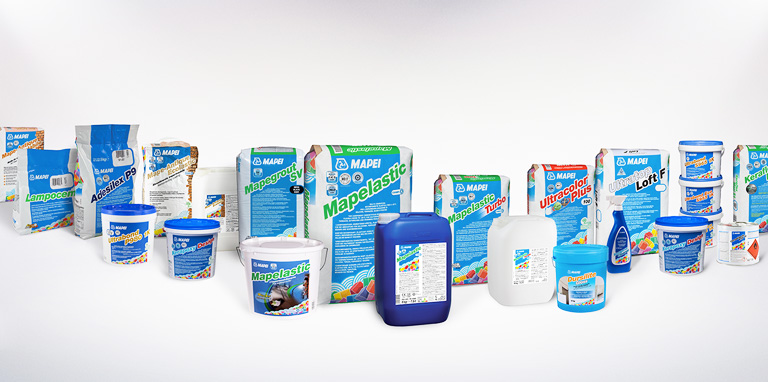
Mapei has a broad portfolio covering ceramic tile installation, waterproofing, concrete repair, structural bonding, flooring preparation, resin flooring, sealants and surface protection. Its product families include Mapelastic, Mapefix, Mapegrout, Adesilex, Keraflex, Ultracolor, Kerapoxy and Mapefloor.
At Startcore Ventures Ltd, customers can explore selected Mapei construction chemicals and request help identifying products for specific applications. Rather than treating every product as a universal solution, we encourage buyers to start with the actual construction problem and select a compatible system.
This guide covers ten important Mapei product choices and five additional products that deserve greater consideration in Kenya's construction market. It also explains where other manufacturers compete, how to compare solutions responsibly and what information to prepare before requesting a quotation.
Need help selecting a product? Contact Startcore with the project location, application, substrate, approximate area and any relevant drawings or specifications. This makes it easier to narrow down the appropriate product options.
1. Understanding the Kenyan Market for Construction Chemicals
Kenya's construction market includes residential housing, commercial developments, apartment blocks, hotels, hospitals, schools, warehouses, factories, infrastructure projects and refurbishment work. Each type of project creates different demands for construction chemicals.
A residential bathroom may need a compatible waterproofing membrane, tile adhesive and grout. A basement may require a more specialised below-ground waterproofing design. An industrial floor may need a resin coating selected for traffic, cleaning procedures and chemical exposure. A damaged concrete column may require a repair mortar and, depending on the cause and severity of damage, additional structural assessment.
This variety creates demand for different product categories rather than one universal construction chemical.
Waterproofing and moisture protection
Water ingress can damage finishes, contribute to mould growth, cause paint failure, deteriorate masonry and accelerate concrete deterioration. Common areas of concern include roofs, balconies, bathrooms, terraces, water-retaining structures, basements and foundations.
The most suitable system depends on where the water originates, whether the surface is above or below ground, the expected water pressure, the substrate and whether the waterproofing will be exposed or covered by another finish.
Mapei competes in this area with established alternatives from manufacturers such as Sika and Fosroc, alongside other waterproofing brands available in Kenya. The right comparison is between products designed for the same application, not simply between containers with similar names.
Tile adhesives and grouts
Modern projects use ceramic tiles, porcelain, large-format tiles, natural stone and decorative mosaics. These materials do not all place the same demands on an adhesive.
The correct adhesive selection depends on the tile type, size, substrate, installation location and relevant product classification. A standard ceramic-tile adhesive should not automatically be assumed suitable for every large-format porcelain installation or every demanding exterior application.
Grout selection is equally important. Joint width, cleaning requirements, moisture exposure, staining risk and chemical exposure all influence the appropriate choice.
Concrete repair and structural bonding
Concrete can deteriorate because of corrosion, impact, poor workmanship, chemical exposure, cracking or long-term environmental conditions. Repair products are selected according to the type of defect, required repair thickness, substrate condition and performance specification.
A cosmetic surface repair is not equivalent to a structural repair. Where damage affects reinforcement, load-bearing elements or structural integrity, an appropriately qualified professional should assess the structure and specify the repair.
Industrial flooring and surface protection
Warehouses, production areas, workshops, food-processing environments and commercial facilities may need specialised flooring. Relevant considerations include abrasion, impact, chemical exposure, cleaning procedures, slip resistance, moisture in the substrate and the time available for installation.
Mapei's flooring range includes primers, levelling compounds and resin-based systems. These products can be relevant when a project requires more than a conventional cement screed or ordinary floor finish.
Why buyers should compare complete systems
A waterproofing membrane may require compatible reinforcement at selected details, appropriate substrate preparation and a protective or tiled finish. A resin floor may require a primer and carefully controlled substrate moisture. A tile installation may require a compatible adhesive, grout and movement-joint treatment.
Comparing only the purchase price of two products can therefore produce a misleading result.
For contractors and procurement teams, a more useful comparison includes:
- Product suitability for the intended application.
- Required consumption and total quantity.
- Substrate preparation and repair requirements.
- Compatibility with adjacent materials.
- Labour and installation time.
- Required curing or waiting periods.
- Protection and maintenance requirements.
- Technical documentation and project specifications.
Startcore's role is to help buyers identify relevant products and make informed enquiries, while the final system specification should follow the manufacturer's current technical documentation and project requirements.
2. Ten Mapei Products and Product Families Worth Considering
The following ten products represent commercially relevant application areas for Kenyan construction and refurbishment projects. They are selected because they address common project needs and have identifiable alternatives in the market—not because audited Kenyan sales-volume data establishes them as the country's ten best-selling Mapei products.
Availability, packaging and suitability should be confirmed for each order.
Product 1: Mapei Mapelastic Smart — Flexible Waterproofing for Concrete and Masonry
Mapelastic Smart is a two-component, flexible cementitious waterproofing mortar. The standard kit comprises a powder component and a liquid polymer component mixed before application.
It is designed for selected applications such as balconies, terraces, bathrooms and swimming pools, subject to the manufacturer's application requirements. Its flexibility and crack-bridging characteristics make it relevant where the specified waterproofing system must accommodate limited movement in the substrate.
Where it may be used
Mapelastic Smart may be considered for suitable concrete and cementitious surfaces in:
- Bathrooms and shower areas.
- Balconies and terraces.
- Swimming pools and compatible water-retaining structures.
- Selected concrete and masonry waterproofing applications.
- Areas receiving a compatible tile finish after the required curing period.
The product should not be treated as a substitute for structural crack repair, correctly designed movement joints or proper drainage. A coating cannot compensate for every underlying construction defect.
What should the contractor check?
Before selecting Mapelastic Smart, establish whether the substrate is suitable, whether cracks or joints need separate treatment, how the waterproofing will be protected, and which finish will be installed over it.
The required thickness and material consumption must follow the current Mapei technical data sheet. Actual consumption depends on surface texture, application technique and the specified system.
Competing solutions
In the Kenyan market, relevant comparison categories include flexible cementitious waterproofing systems such as SikaTop Seal-107 KE and Fosroc Nitocote CM210. These products have their own application limits and performance characteristics, so they should not be treated as identical alternatives.
The correct decision depends on the project specification, water exposure, flexibility requirement, substrate, finishing system and technical approval.
Explore: Mapei Mapelastic Smart at Startcore.
Product 2: Mapei Mapelastic Foundation — Waterproofing for Below-Ground Structures
Foundations, basement walls and other below-ground structures can face persistent moisture, groundwater and water pressure. These conditions require a different approach from waterproofing an exposed bathroom floor or an ordinary roof.
Mapelastic Foundation is a flexible cementitious waterproofing product intended for relevant foundation and underground applications. The suitability of the system depends on the construction details, substrate, exposure and manufacturer's technical requirements.
Where it may be used
Potential applications include suitable:
- Foundation walls.
- Basement structures.
- Lift pits.
- Below-ground concrete surfaces.
- Masonry and concrete areas specified for the product.
The important first step is to identify how water is reaching the structure. Water may enter through cracks, construction joints, service penetrations, defective external membranes or other discontinuities. Each may need specific detailing or repair.
Why below-ground waterproofing needs planning
When a basement becomes damp, applying a coating to the visible internal patch may not resolve the source of the problem. Water can travel through a structure before appearing at a different point.
A sound waterproofing plan considers drainage, groundwater conditions, construction joints, penetrations, surface preparation and whether the system must resist positive or negative water pressure.
The designer must confirm the intended waterproofing strategy and whether the selected product is appropriate for that exposure. Serious water ingress or structural defects may require specialist assessment.
Competing solutions
Fosroc Nitocote CM210 and other cementitious waterproofing systems may be relevant comparison points for suitable below-ground applications. Sika and other specialist manufacturers also offer waterproofing products.
Compare the systems according to the actual project requirement rather than relying on a general claim that one brand is always superior.
Explore: Mapei Mapelastic Foundation at Startcore.
Product 3: Mapei Mapelastic AquaDefense — Ready-to-Use Waterproofing for Wet Areas
Mapelastic AquaDefense is a ready-to-use flexible liquid waterproofing membrane intended for selected internal and external applications before ceramic, stone or mosaic finishes are installed.
Unlike a two-component cementitious mortar that requires the components to be mixed, a ready-to-use membrane is supplied for application according to the manufacturer's instructions.
Typical applications
Subject to the applicable technical data sheet, AquaDefense may be considered for:
- Bathrooms.
- Shower cubicles.
- Laundry rooms.
- Balconies and terraces.
- Selected surfaces that will receive compatible tiled finishes.
Its potential advantage is the convenience of a ready-to-use format and a system designed around tiled wet-area installations. However, the permitted substrate, environmental conditions, application thickness and waiting times must all be confirmed.
What buyers should consider
The product should be selected according to the substrate and intended finish. A membrane intended for under-tile waterproofing should not automatically be specified as an exposed roof coating or for a high-pressure water-retaining structure.
Corners, drains, pipes and changes of plane deserve particular attention because they can become weak points in a waterproofing system.
The installer should follow the prescribed detailing and use compatible accessories where required.
Competing solutions
Sika and other construction-chemical manufacturers supply products for wet-area and under-tile waterproofing. When comparing these products, check permitted substrates, drying time, tile installation waiting period, consumption and system accessories.
A quick-drying product may help with scheduling, but only when the site's actual conditions match the manufacturer's stated requirements.
Explore: Mapei's waterproofing range at Startcore and request confirmation of current AquaDefense availability.
Product 4: Mapei Aquaflex Roof Plus — Roof Waterproofing and Reflective Protection
Roof waterproofing is a high-intent product category because leaks can damage ceilings, electrical installations, finishes, stored goods and the building fabric.
Aquaflex Roof Plus is an acrylic waterproofing coating designed for relevant roof applications. The manufacturer's current documentation should be used to confirm the approved substrate, preparation, reinforcement requirements, number of coats and exposure conditions.
Where roof coatings may be considered
Depending on the substrate and specification, liquid-applied roof waterproofing may be considered for suitable:
- Roof surfaces.
- Terraces.
- Exposed concrete areas.
- Roof refurbishment projects.
- Surfaces where a compatible reflective waterproofing system is specified.
The most common selection mistake
A leaking roof does not always need another coating. Blocked outlets, poor falls, damaged flashings, failed joints, loose substrate material and standing water can all contribute to leakage.
A roof inspection should establish whether the substrate is stable and whether drainage or construction details need correction before a new coating is applied.
The chosen product must be suitable for the actual exposure. Not every acrylic coating is appropriate for every roof, substrate or ponding-water condition.
Competing solutions
Products such as Akfix EM600 Waterguard and other liquid roof waterproofing systems can be relevant alternatives for selected applications. The choice should be based on the manufacturer's declared uses and the roof's condition.
For a contractor, the useful comparison is not simply the cost of a bucket. It is the estimated system cost per square metre after accounting for preparation, consumption, coats, reinforcement and any necessary repairs.
Explore: Startcore's waterproofing guide and ask for help selecting a suitable roof waterproofing system.
Product 5: Mapei Planiseal 88 — Cementitious Waterproofing for Concrete and Masonry
Planiseal 88 is a cementitious waterproofing product listed in the supplied Mapei price list for potable-water tank waterproofing. The current technical data sheet must be consulted before specifying it for a particular tank, reservoir or other water-exposed structure.
Why tank waterproofing matters
Water-retaining structures must be assessed differently from ordinary walls. A tank may be exposed to continuous water contact, pressure, construction joints and cleaning requirements.
Where water is intended for drinking, product suitability and compliance requirements must be confirmed for the exact application. Do not assume that every waterproofing product is approved for potable-water contact simply because it is cement-based.
What should be checked?
Before specifying Planiseal 88, establish:
- The type and condition of the concrete or masonry.
- Whether the product is suitable for the intended water exposure.
- The required preparation and application thickness.
- The treatment of construction joints and penetrations.
- The manufacturer's requirements for curing and commissioning.
- Any project-specific approval for potable-water contact.
A tank should not be filled until the specified curing and testing procedures have been completed.
Competing solutions
Fosroc, Sika and other manufacturers supply products for water-retaining and waterproofing applications. Compare the approved use, water-pressure capability, substrate requirements and documentation for each proposed system.
The most suitable option is the one that meets the project specification and can be installed correctly—not necessarily the one with the lowest purchase price.
Explore: Startcore's waterproofing category and request confirmation of current Planiseal 88 availability.
Product 6: Mapei Adesilex P7 — Tile Adhesive for Suitable Ceramic and Porcelain Installations
Tile adhesive is one of the construction-chemical categories that contractors, tilers, developers and homeowners may need repeatedly throughout a project.
Adesilex P7 is listed in the supplied Mapei range as a C2T cementitious tile adhesive for suitable floor and wall ceramic or porcelain applications. The product's current technical data sheet and classification must be checked against the specific installation.
Why the correct tile adhesive matters
Tile installation failures can arise from several causes: poor substrate preparation, unsuitable adhesive selection, incorrect mixing, inadequate coverage, installation outside the open time or movement in the substrate.
The adhesive is only one part of the installation system.
A tiler should establish the tile type and dimensions, substrate, location, moisture exposure, movement conditions and whether the installation is internal or external. Large-format porcelain and demanding exterior installations may require a different adhesive class from a basic ceramic-tile job.
Where Adesilex P7 may fit
It may be considered for applications permitted by the current product documentation, including suitable ceramic and porcelain tile installations on floors and walls.
It should not be treated as a universal adhesive for every tile, substrate or exposure.
Competing products
SikaCeram tile adhesives and other locally available tile adhesive systems are relevant alternatives. For example, Sika Kenya lists products for general-purpose, high-performance and porcelain-tile applications.
A fair comparison checks the classification, approved tile types, substrate compatibility, open time, slip characteristics, coverage and price per installed square metre.
Explore: Mapei's tile adhesive range through Startcore's construction chemicals category.
Product 7: Mapei Keraflex Maxi S1 — For Suitable Porcelain and Large-Format Tile Installations
As tile sizes increase, adhesive selection becomes more important. Large-format tiles can require careful attention to substrate flatness, coverage, adhesive thickness and the movement characteristics of the installation.
Keraflex Maxi S1 is listed in the supplied Mapei price list as a C2TES1-class adhesive for porcelain and large-format tile applications. The exact approved uses and installation requirements should be confirmed against the current technical documentation.
Why a deformable adhesive may be needed
Some installations experience movement from temperature variation, substrate deflection or other conditions. A deformable adhesive can be relevant where the tile system requires it, but it cannot compensate for an unstable substrate or an incorrectly designed installation.
The installer must ensure that the substrate meets the required tolerances and that the adhesive is applied using the prescribed trowel and technique.
Where it may be considered
Depending on the technical specification, Keraflex Maxi S1 may be considered for suitable porcelain tiles, large-format tiles and other compatible applications.
The choice between grey and white adhesive should also reflect the tile and installation requirements, particularly where the colour of the adhesive may affect the appearance of a light or translucent material.
Competing products
SikaCeram high-performance tile adhesives and comparable systems from other manufacturers may be considered where their specifications match the project. Product classification, tile size, substrate and exposure should guide the comparison.
For developers, the aim should be a reliable tile installation with appropriate materials and workmanship—not simply the purchase of a more expensive adhesive.
Explore: Mapei tile adhesives and ask Startcore to help identify the relevant product for the tile and substrate.
Product 8: Mapei Ultracolor Plus — Cementitious Grout for Tile Joints
Grout influences the finished appearance of a tiled surface and helps fill the joints between tiles. It should be selected according to joint width, tile type, exposure, cleaning requirements and the product's declared performance.
Ultracolor Plus is a quick-setting cementitious grout listed in the supplied Mapei range with water-repellent and mould-resistance characteristics. The current technical documentation should be consulted to confirm the permitted joint widths, installation conditions and colour options.
Where it may be used
Depending on the specification, cementitious grout may be suitable for selected:
- Residential floors and walls.
- Bathrooms and kitchens.
- Commercial tiled areas.
- Renovation and refurbishment projects.
- Other ceramic or compatible tiled installations.
The exact application depends on the grout's approved uses and the installation conditions.
Why grout selection matters
The grout must suit the tile joint and exposure. It is not a replacement for an appropriate waterproofing membrane behind the tiles, nor is it a substitute for correctly designed movement joints.
Poor mixing, incorrect cleaning, excessive water during finishing or unsuitable curing conditions can affect the final result.
A tile installer should follow the manufacturer's mixing, application and cleaning instructions. A sample area may be useful where colour consistency is especially important.
Competing products
SikaCeram grouts and other cementitious grout products can be considered where their performance and application requirements match the project.
For areas with demanding chemical exposure or special hygiene requirements, an epoxy grout may be more appropriate than a standard cementitious grout. The decision should be based on the use case, not on the assumption that every epoxy grout is automatically necessary.
Explore: Mapei grout options through Startcore's construction chemicals range.
Product 9: Mapei Kerapoxy Easy Design — Decorative and Chemical-Resistant Epoxy Grouting
Epoxy grout is a specialist option for applications where the project requires properties beyond those of a conventional cementitious grout.
Kerapoxy Easy Design is a two-component epoxy grout with improved workability and decorative options. Mapei describes it as suitable for selected ceramic, glass mosaic and stone applications, with use as an adhesive also permitted under the product's technical requirements.
Where epoxy grout may be worth considering
Potential applications include selected:
- Commercial kitchens and food-related areas.
- Bathrooms and wet areas.
- Decorative tile and mosaic installations.
- Areas where stain resistance and cleaning are important.
- Projects with specified chemical-resistance requirements.
The product's suitability must be confirmed for the actual chemicals, temperatures and cleaning methods involved.
What contractors should know
Epoxy grout differs from cementitious grout in mixing, installation and cleaning. Installers must understand the working time and cleaning process before starting a large area.
The tile surface must be compatible with the selected product and cleaning method. A trial area can help confirm the desired finish and prevent avoidable cleaning problems.
Epoxy grout can carry a higher material cost than standard cementitious grout, but the relevant comparison includes maintenance, cleaning, durability and the requirements of the intended environment.
Competing solutions
Other epoxy grout products may be available from competing construction-chemical manufacturers. Compare the product's declared chemical resistance, approved joint width, colour range, installation process and cleaning requirements.
Do not specify epoxy grout simply because the project is commercial. It should be selected when the application and performance requirements justify it.
Explore: Kerapoxy Easy Design through Startcore's Mapei range and request current availability.
Product 10: Mapei Mapesil AC — Silicone Sealant for Compatible Elastic Joints
Sealants are used at selected joints and transitions where a flexible seal is required. These locations may include connections between finishes, sanitary installations or other joints covered by the product's technical documentation.
Mapesil AC is a silicone sealant listed in the supplied Mapei range. The exact product selection depends on the substrate, exposure, movement, joint design and whether the sealant is suitable for the specific location.
Why sealant choice matters
A joint that moves needs a product designed to accommodate that movement. A sealant selected for one substrate or environment may not be suitable for another.
Before specifying Mapesil AC, check the substrate compatibility, joint dimensions, exposure to water, cleaning chemicals and any mould-resistance requirements.
Correct joint preparation is essential. The surface must be prepared according to the manufacturer's instructions, and the joint geometry must allow the sealant to perform as intended.
Where it may be considered
Subject to the current technical data sheet, Mapesil AC may be considered for suitable sanitary and finishing joints and other approved applications.
It should not be substituted for a structural joint system or a specialist sealant intended for a different exposure without technical confirmation.
Competing products
Sika, Akfix and other manufacturers supply silicone sealants for different construction applications. Startcore also supplies sealants from multiple brands, which makes it possible to guide customers toward a product that fits the required use rather than assuming one sealant works everywhere.
Explore: Mapei sealants and Startcore's silicone sealant category.
3. Five Additional Mapei Products That Deserve More Attention
The following products provide opportunities to expand beyond routine waterproofing and tiling enquiries. They may be useful to contractors, engineers, maintenance teams and specialist applicators. Their suitability and current availability should be confirmed before quoting.
Product 11: Mapei Mapefix EP 50 — Chemical Anchoring for Specified Fixings
Chemical anchoring is relevant when a project requires resin-based anchoring of suitable threaded rods or reinforcing bars into an approved substrate.
Mapefix EP 50 is listed in the supplied Mapei price list as an epoxy resin chemical anchoring product. The exact approved uses, embedment depths, load capacities, hole-cleaning procedure, temperature conditions and installation requirements must be confirmed from the current technical documentation.
Potential applications
Depending on the manufacturer's approval and the engineer's specification, resin anchoring systems may be used for selected:
- Threaded rods.
- Reinforcing-bar connections.
- Fixings in concrete.
- Retrofitting work.
- Other approved anchoring applications.
Chemical anchors are not interchangeable solely because they come in cartridges. Load requirements, substrate condition, hole diameter, embedment depth, edge distances and installation conditions affect performance.
Market-entry opportunity
A contractor who already buys mechanical fixings may not automatically consider resin anchoring for a more specialised application. A helpful product page can explain the difference between ordinary fastening and engineered anchoring, then invite the customer to provide the rod diameter, substrate, load information and project specification.
This is an opportunity for Startcore to enter a technical conversation earlier in the procurement process.
Where structural loads are involved, the product must be selected and installed according to the approved design and manufacturer instructions.
Product 12: Mapei Eporip — Bonding and Sealing of Suitable Construction Joints
Eporip is listed in the supplied Mapei price list as an adhesive for construction joints and a crack-sealing product. Its exact uses and limitations must be confirmed from the current technical data sheet.
Why construction joints matter
Construction joints are part of the way concrete work is carried out in stages. Their treatment depends on the structural design, joint condition and the required performance.
A product intended for bonding or sealing a specified joint should not be assumed to repair every crack or restore the load-bearing capacity of damaged concrete.
Potential applications
Depending on the technical specification, Eporip may be relevant to selected bonding and construction-joint work where the product is approved.
Before recommending it, establish the joint type, substrate condition, movement, moisture and whether the repair is structural or non-structural.
Market-entry opportunity
Eporip can help Startcore reach customers searching for construction-joint bonding, concrete repair materials and specialist epoxy products. The sales conversation should begin with the defect or joint, not with a generic request for glue.
For cracks in load-bearing structures or defects that may indicate structural movement, recommend assessment by a qualified professional before selecting a repair material.
Product 13: Mapei Mapegrout TX60 — Specialist Concrete Repair Mortar
Mapegrout products address selected concrete repair requirements. The supplied Startcore website includes a Mapegrout T60 product page, while the uploaded Mapei price list separately lists Mapegrout TX60. These names should not be treated as interchangeable without checking their technical documentation.
Mapegrout TX60 is listed in the supplied price list as a repair mortar described for sulfate- and chloride-resistant repair applications. The product's current technical data sheet should determine its approved uses and performance characteristics.
Potential applications
Subject to the exact product specification, specialist repair mortars may be considered for selected:
- Deteriorated concrete.
- Concrete repair work.
- Suitable vertical or overhead repairs.
- Areas exposed to specified environmental conditions.
- Maintenance and rehabilitation projects.
The repair thickness, surface preparation, reinforcement condition and curing procedure must be checked before selecting a mortar.
Market-entry opportunity
A customer who asks for cement, plaster or filler may actually have a concrete repair problem requiring a different product. A diagnostic conversation can establish whether the defect is superficial, caused by water ingress, related to reinforcement corrosion or potentially structural.
This positions Startcore as a supplier that helps customers identify a suitable repair product instead of merely selling a bag of material.
Product 14: Mapei Planicrete SP — Latex-Based Bonding Agent
Planicrete SP is listed in the supplied Mapei price list as a latex-based bonding agent.
Bonding agents can be relevant where a specified repair or overlay system requires improved bonding between compatible cementitious materials. The exact mixing method, substrate preparation and permitted uses depend on the product documentation.
Why bonding preparation matters
A new cementitious layer will not necessarily bond well to an old surface simply because both contain cement. Dust, contamination, weak material, excessive drying, incorrect preparation or an incompatible application method can compromise the result.
Before selecting a bonding agent, identify the old and new materials, the surface condition and the intended repair or overlay.
Market-entry opportunity
Planicrete SP may help Startcore reach customers dealing with screed repairs, cementitious overlays and bonding problems. The useful service is to help identify whether the application requires a bonding agent, a repair mortar, a primer or a more extensive system.
A bonding agent should never be used as a universal solution for a structurally unsound substrate.
Product 15: Mapei Mapecoat FC 200 ME — Industrial Resin Flooring
Industrial and commercial floors face demands that differ from those of ordinary residential floors. Depending on the facility, they may need resistance to abrasion, cleaning chemicals, impact, wheeled traffic or frequent washing.
The supplied price list includes the Mapefloor FC 200 ME resin-flooring system. The exact product name, components, current availability and intended application should be verified before publication or quotation.
Potential applications
Subject to the current product documentation and project specification, resin flooring systems may be considered for selected:
- Workshops.
- Warehouses.
- Commercial facilities.
- Production areas.
- Maintenance and service environments.
Not every resin floor is suitable for every industrial environment. Chemical exposure, temperature, substrate moisture, surface preparation, required thickness and slip-resistance requirements all matter.
Market-entry opportunity
Industrial flooring can create larger, specification-led enquiries than routine retail purchases. A contractor may need a complete system comprising surface preparation, primer, resin coating and the appropriate finish.
Startcore can use this product family to reach facility managers, contractors, factory operators and procurement teams who need a technical quotation rather than a single-item price.
The next step should be to collect the project area, substrate details, current floor condition, expected traffic, chemical exposure and the required finish before proposing a product system.
4. Mapei Products Compared With Other Construction-Chemical Brands in Kenya
A strong product guide should acknowledge competition honestly. Kenyan buyers can encounter multiple brands offering solutions for waterproofing, tile installation, concrete repair, sealants and flooring.
The objective is not to claim that Mapei is always better or that competitors are inferior. It is to help the buyer compare the products that are genuinely suitable for the same job.
Mapei and Sika
Sika has established construction-chemical product families covering waterproofing, tile adhesives, grouts, bonding and other building applications.
For example, SikaTop Seal-107 KE is a cementitious waterproofing product, while the SikaCeram range includes tile adhesives for different applications.
When comparing Mapei with Sika, identify the application first. Compare the relevant waterproofing product with the corresponding waterproofing product, or the tile adhesive with a tile adhesive of the required classification.
Do not assume a product's name or brand alone establishes equivalence.
Mapei and Fosroc
Fosroc offers products for waterproofing, concrete repair, grouting and other construction-chemical applications. Nitocote CM210, for example, is described by Fosroc as a flexible cementitious waterproofing coating for water-retaining and water-excluding structures.
A comparison with a Mapei waterproofing product should examine the declared uses, substrate, water pressure, crack accommodation, reinforcement details, curing requirements and compatibility with the final finish.
Mapei and Dr. Fixit
Dr. Fixit products are visible in Kenya's waterproofing market, including products offered through local suppliers. Different products within a manufacturer's range may target roofs, wet areas, foundations or other waterproofing applications.
The correct comparison depends on the precise product and use case. A roof coating should not be compared with a basement waterproofing mortar merely because both are marketed as waterproofing products.
Mapei and locally available construction-chemical brands
Kenya also has locally marketed construction-chemical ranges covering tile adhesives, waterproofing, bonding agents, leak sealing and floor preparation.
These brands may offer alternatives for projects with different budget, specification or supply requirements. Local availability and familiarity can influence procurement, but the product still needs to meet the project's technical requirements.
A practical comparison checklist
Before choosing between Mapei and another brand, ask:
- Does the product have an approved application for the job?
- Is it compatible with the substrate?
- Does its classification meet the project specification?
- What is the expected consumption at the required thickness?
- What preparation and accessories are required?
- How long must it cure before the next stage?
- Is it compatible with the intended tile, coating or finish?
- What technical documents are available?
- Is the product available in the required quantity and timeframe?
- What is the total system cost, not merely the container price?
This approach helps buyers make more useful comparisons and reduces the risk of selecting a product that appears cheaper but does not meet the project's requirements.
5. How to Select the Right Mapei Waterproofing Product
Waterproofing is one of the most important categories for a construction-chemical supplier because it involves several different product types and installation conditions.
The following guide is a starting point, not a substitute for the manufacturer's technical documentation or a project-specific specification.
For bathrooms and shower areas
Start by identifying the substrate and the intended tile finish. A suitable under-tile membrane may be required, followed by a compatible adhesive and grout.
Pay attention to corners, drains, pipe penetrations and changes of plane. These details must be treated according to the selected system.
For balconies and terraces
Determine whether the surface is concrete or another substrate, whether water can drain properly and whether the waterproofing will be covered by tiles or remain exposed.
The product must suit the exposure and intended finish. Drainage defects and unstable substrates should be corrected before waterproofing.
For roofs
Inspect the existing coating, substrate, flashings, joints, outlets and drainage. Establish whether the surface experiences ponding water and whether the proposed coating is approved for those conditions.
A liquid-applied roof membrane may be appropriate for a suitable prepared surface, but it should not be used to conceal serious drainage or structural defects.
For foundations and basements
Consider groundwater, hydrostatic pressure, construction joints, penetrations, external access and the direction from which water acts on the structure.
The waterproofing system must be selected for the specific below-ground conditions. In difficult cases, a specialist waterproofing design may be necessary.
For water tanks
Check whether the product is approved for the intended water contact and whether it is appropriate for the tank's construction and water pressure.
Follow the specified curing and commissioning procedure before filling the tank. Where potable water is involved, confirm all relevant approvals.
For concrete exposed to deterioration
Identify the source of the problem before applying a repair mortar or protective coating. Water ingress, reinforcement corrosion, chemical exposure and structural movement require different responses.
A repair material should be chosen according to the defect, required repair thickness and performance specification.
6. Estimating Material Quantities Without Underbuying or Wasting Product
One of the most common procurement mistakes is estimating a construction chemical from the container price alone.
The number of units required depends on the specified consumption, area, thickness, substrate condition and application method. The manufacturer's theoretical coverage should be treated as a starting point, not a guarantee of actual site coverage.
Step 1: Measure the application area
For a rectangular surface, multiply length by width. For irregular surfaces, break the area into manageable sections and add them together.
Record separate areas for floors, walls, upstands and other details where the consumption or application method may differ.
Step 2: Confirm the required system thickness
Waterproofing and coating products may have specified minimum thicknesses or coat requirements. Do not reduce the thickness simply to stretch a kit across a larger area.
The correct thickness must come from the current technical data sheet and project specification.
Step 3: Use the manufacturer's consumption figure
Multiply the area by the relevant consumption rate. If the product is specified by weight per square metre per millimetre, use the actual required thickness in the calculation.
For products sold in sets or kits, divide the total material requirement by the usable quantity per set to estimate the number of sets needed.
Step 4: Account for site conditions
Rough surfaces, repairs, waste, uneven substrates and application technique can increase actual consumption. The correct allowance should be agreed with the installer or project team rather than invented as a universal percentage.
Step 5: Include compatible accessories
The material order may also need primers, tapes, mesh, joint sealants, repair mortars or protective finishes. The need for these components depends on the specified system.
Step 6: Request a project quotation
For a commercial or multi-unit project, provide the measured area, intended application, substrate, required finish, site location and target installation date.
Startcore can then help identify relevant products and confirm current availability and pricing for the proposed order.
7. Common Mistakes When Buying Construction Chemicals
Choosing a product by price alone
A low-priced product is not necessarily the most economical solution. Consumption, preparation, accessories, labour and the consequences of failure can all affect total cost.
Treating every waterproofing product as interchangeable
Roof coatings, cementitious waterproofing mortars, under-tile membranes and below-ground systems may serve very different purposes.
Ignoring substrate preparation
Dust, oil, weak concrete, laitance and loose material can interfere with adhesion. Correct preparation is a fundamental part of the installation.
Applying a product outside its approved use
A product suitable for one substrate or exposure may not be suitable for another. Check the current technical data sheet before specifying it.
Ignoring joints and penetrations
Corners, drains, pipes and construction joints often need special treatment. A large, flat area may be coated correctly while a poorly detailed joint still allows water ingress.
Mixing products from different systems without checking compatibility
Using a primer, membrane, adhesive, grout or coating from different manufacturers is not automatically wrong, but compatibility should be confirmed. Where a manufacturer specifies a complete system, follow its requirements.
Ignoring curing and waiting times
Applying another material too early can affect adhesion and performance. Plan the installation sequence around the specified drying, curing and testing periods.
Failing to document the installation
For commercial and technical projects, retain product details, batch information where appropriate, application records and relevant technical documents. This helps the project team verify what was installed.
8. Why Source Mapei Products Through Startcore Ventures Ltd?
Choosing a construction-chemical supplier should involve more than finding a product listing online. Buyers may need help narrowing down the product family, confirming packaging, checking current availability and coordinating procurement for a project.
Startcore Ventures Ltd supplies construction chemicals, adhesives, sealants, tools and related products from its Nairobi base and serves customers seeking products for projects in Kenya.
Product guidance before purchase
If you are uncertain whether the project requires a flexible cementitious membrane, ready-to-use waterproofing coating, tile adhesive, epoxy grout, concrete repair mortar or resin flooring system, explain the application before placing an order.
Useful information includes:
- The project type and location.
- The surface or substrate.
- The approximate area or quantity.
- Whether the product will be exposed or covered.
- The intended finish.
- The nature of any existing defect.
- The project specification or relevant drawing, where available.
This information helps the team direct the enquiry toward suitable options.
Support for contractors and procurement teams
Contractors and procurement teams may need more than one product for a single work package. A waterproofing package could include surface repair materials, a membrane, reinforcement and a compatible finish. A tile installation package could include adhesive, grout and sealant.
For project enquiries, share the bill of quantities or product schedule where available. This makes it easier to review the requested items and identify what needs confirmation.
Availability and quotations
Product availability and prices can change. Confirm the current selling price, pack size, quantity and delivery arrangements before committing to a project budget.
For larger quantities, request a quotation rather than relying on an old price in an article or a historical price list.
Nairobi base and nationwide enquiries
Startcore is based at Bhavesh Centre, Mezzanine Floor, Ngara Road, Nairobi. Customers can contact the team to enquire about product availability and delivery arrangements for their project location.
The objective is to make product selection and procurement more straightforward, particularly when the correct chemical is not obvious from the product name alone.
9. Frequently Asked Questions About Mapei Products in Kenya
Where can I buy Mapei products in Kenya?
You can enquire about selected Mapei construction chemicals through Startcore Ventures Ltd in Nairobi. Confirm the exact product, pack size, availability and current price before ordering.
Which Mapei product is best for waterproofing?
There is no single best Mapei waterproofing product for every project. Mapelastic Smart, Mapelastic Foundation, Mapelastic AquaDefense, Aquaflex Roof Plus and Planiseal 88 address different applications. The correct choice depends on the substrate, water exposure, intended finish and manufacturer's technical requirements.
What is the difference between Mapelastic Smart and Mapelastic Foundation?
They are different products with different intended applications. Mapelastic Smart is a flexible cementitious waterproofing mortar used for specified applications such as balconies, terraces, bathrooms and swimming pools. Mapelastic Foundation is intended for relevant foundation and underground waterproofing applications. Confirm the current technical documentation before specifying either product.
Is Mapelastic AquaDefense the same as Mapelastic Smart?
No. AquaDefense is a ready-to-use liquid membrane, while Mapelastic Smart is a two-component cementitious waterproofing mortar. Their application methods, substrate requirements and approved uses differ.
Which Mapei product is suitable for porcelain tiles?
The right adhesive depends on the porcelain tile, size, substrate, location and project requirements. Adesilex P7 and Keraflex Maxi S1 are listed in the supplied Mapei range, but their current technical classifications and permitted applications should be checked before selection.
Which Mapei grout should I choose?
The choice depends on the joint width, tile material, exposure, cleaning requirements and performance specification. Ultracolor Plus is a cementitious grout, while Kerapoxy Easy Design is an epoxy grout. The correct choice depends on the application.
Are Mapei products interchangeable with Sika or Fosroc products?
Not automatically. Products from different manufacturers may address similar problems, but their classifications, application requirements and performance characteristics can differ. Compare the exact product and the current technical data sheets.
How much Mapei waterproofing material do I need?
The required quantity depends on the area, specified thickness, manufacturer's consumption rate and site conditions. Share the measured area and application details with the supplier and installer for a more reliable estimate.
Can I use a waterproofing product to repair a structural crack?
Not without confirming the nature of the crack and the product's intended use. Structural cracks, moving joints and defects associated with reinforcement corrosion may need specialist assessment and a specific repair design.
Does the cheapest product give the best value?
Not necessarily. Compare the total system cost, including consumption, preparation, accessories, labour, curing time and suitability for the project. A product that does not meet the required performance can create much greater costs later.
Can Startcore help with a project quotation?
Yes. Share the product schedule, bill of quantities or a description of the work, along with the project location and quantities required. Startcore can help review the product enquiry and confirm availability and quotation details.
10. Request a Mapei Product Recommendation or Quotation
Choosing the correct construction chemical can save time, reduce avoidable waste and help a project meet its technical requirements.
Whether you are waterproofing a bathroom, protecting a foundation, installing porcelain tiles, repairing concrete, sealing joints or specifying an industrial floor, begin with the application and the performance requirements.
Startcore Ventures Ltd can help you explore selected Mapei products and related construction-chemical options for your project.
Contact Startcore Ventures Ltd
- Phone: 0705 544 817
- Office: 0737 636 611
- Email: [email protected]
- Location: Bhavesh Centre, Mezzanine Floor, Ngara Road, Nairobi, Kenya
- Website: www.startcore.co.ke
When making an enquiry, include the product name if known, project location, quantity, application and any relevant technical specification. For waterproofing or concrete repair, photographs and measured areas can also help the team understand the request.
For structural, potable-water, high-pressure or other safety-critical applications, final product selection and installation must follow the manufacturer's current technical documentation and the project engineer's specification.
Mapei products in Kenya: choose the application carefully, specify the right system and procure with confidence through Startcore Ventures Ltd.