

 IN STOCK
 3M
3M
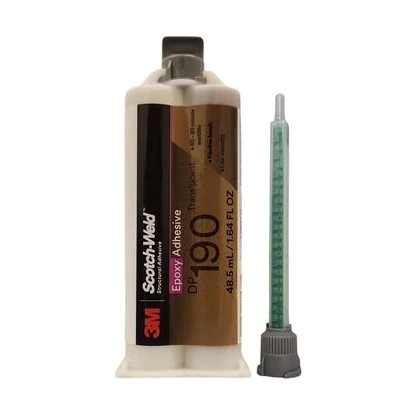
Scotch-Weld™ Epoxy Adhesive DP190
3M™ Scotch-Weld™ Epoxy Adhesive DP190 – High-Strength Structural Epoxy Adhesive
3M™ Scotch-Weld™ Epoxy Adhesive DP190 Price in Kenya: KSh 9,120 Inc. VAT
When an ordinary glue is not strong enough, and a silicone or general-purpose construction adhesive is not designed for the job, 3M™ Scotch-Weld™ Epoxy Adhesive DP190 provides a professional two-part structural bonding solution for demanding assembly, repair, fabrication and construction applications.
DP190 is a high-performance two-part epoxy adhesive designed to bond a wide range of similar and dissimilar materials, including metals, ceramics, wood, fiberboard, glass, rubber and many plastics. It is formulated to provide high shear and peel strength while maintaining resistance to shock, vibration, flexing and environmental aging.
Available from Startcore Ventures Limited in Kenya at KSh 9,120 including VAT, 3M Scotch-Weld DP190 is suited to professional users who need a dependable structural adhesive for industrial bonding, fabrication, equipment repair, construction and assembly applications.
Unlike fast-setting super glues that leave little time for positioning, DP190 provides an extended working period, allowing the user to align, adjust and position components accurately before the adhesive develops handling strength.
3M identifies DP190 as a two-part epoxy adhesive with applications including plastic-to-metal bonding, wood-to-metal bonding, wood-to-plastic bonding and semi-flexible potting applications.
Why Choose 3M Scotch-Weld DP190?
Many bonding failures do not happen because the adhesive was completely incapable of sticking two surfaces together. They happen because the adhesive was selected for the wrong application.
A general-purpose glue may provide an initial bond but fail when exposed to vibration, movement, impact or long-term environmental conditions.
A silicone sealant may provide excellent flexibility and weather sealing but may not be the right choice when the primary requirement is structural bonding.
A cyanoacrylate or super glue may set rapidly but provide insufficient working time for large or accurately positioned components.
DP190 addresses a different requirement.
It is a structural epoxy adhesive designed for strong, durable bonding across a wide variety of substrates.
The two-part epoxy system begins curing after the resin and hardener are combined. This gives the installer a defined working period for positioning and adjustment before the bond develops handling strength.
For professional fabrication, maintenance and assembly work, that additional working time can be extremely valuable.
Instead of rushing to position a component before a fast adhesive sets, the technician can concentrate on achieving proper alignment and contact.
3M DP190 Epoxy Adhesive Price in Kenya
The current Startcore price for:
3M™ Scotch-Weld™ Epoxy Adhesive DP190 – KSh 9,120 Inc. VAT
This product is available for customers looking for professional-grade 3M structural adhesive in Nairobi and Kenya.
The price includes VAT.
For contractors, fabricators, workshops, manufacturers and maintenance teams, purchasing the correct adhesive for the application can be significantly more cost-effective than repeatedly repairing failed joints.
The important consideration is not simply the price of a tube or cartridge.
It is the cost of the complete installation.
A failed adhesive joint can result in:
- Rework
- Material wastage
- Production delays
- Damaged components
- Customer complaints
- Installation downtime
- Additional labour
- Emergency repairs
- Project delays
Choosing an adhesive designed for structural bonding can therefore be an important part of controlling the total cost of an installation.
What Is 3M Scotch-Weld DP190?
3M Scotch-Weld DP190 is a two-part epoxy adhesive.
Epoxy adhesives consist of separate components that are mixed together in a specified ratio before application. Once mixed, a chemical curing reaction begins.
DP190 is engineered around a 1:1 mix ratio, making it suitable for controlled dispensing through the appropriate 3M dispensing system when supplied in a Duo-Pak configuration.
The product is available in different formulations, including translucent and grey versions, with differences in working time, viscosity, flexibility and curing characteristics.
The DP190 formulation supplied should always be checked against the specific product identification and packaging before application.
For the grey formulation, 3M specifies a 90-minute work life, while the translucent formulation has an approximately 80-minute work life.
This extended work life is one of the major advantages of DP190 for professional assembly.
High Shear and Peel Strength
One of the key reasons professionals use structural epoxy adhesives is their ability to provide strong bonds under different types of loading.
3M describes DP190 as providing high shear and peel strength.
This makes it useful for applications where bonded components may experience forces beyond simple pulling directly away from the surface.
In real-world fabrication and equipment assembly, joints may experience:
- Vibration
- Flexing
- Impact
- Shear forces
- Peel forces
- Temperature changes
- Environmental aging
An adhesive needs to be selected according to the actual forces and conditions involved.
DP190 is designed to provide a tough structural bond rather than simply creating an adhesive film between two surfaces.
Bond Similar and Dissimilar Materials
One of the biggest advantages of 3M DP190 is its ability to bond a broad range of materials.
3M identifies applications involving:
Metal
DP190 can be used for various metal-to-metal and metal-to-other-material bonding applications where the substrates and service conditions are suitable.
Plastic
The adhesive can be used for bonding many plastics, although compatibility should always be confirmed for the particular plastic.
Wood
DP190 can be used for wood-to-metal and wood-to-plastic bonding applications.
Glass
It can be used for suitable glass bonding applications.
Ceramics
The adhesive can bond ceramic substrates in appropriate assemblies.
Fiberboard
DP190 can be used for bonding fiberboard and related materials.
Rubber
3M identifies rubber among the materials DP190 can bond, subject to substrate compatibility and preparation.
This broad substrate compatibility makes DP190 particularly useful in workshops and fabrication environments where several different materials may need to be joined.
Plastic-to-Metal Bonding
Plastic-to-metal bonding can be difficult because the two materials behave differently.
Metal is generally rigid, while plastic may flex or expand differently with temperature.
Mechanical fastening can sometimes be unsuitable because drilling through plastic can weaken the component or create stress concentration.
DP190 provides an alternative bonding method for suitable applications.
It can be considered for:
- Equipment assemblies
- Enclosures
- Components
- Fabricated assemblies
- Automotive components
- Industrial repairs
- Fixtures
- Brackets
- Product assemblies
The exact plastic type matters.
Not every plastic has the same surface chemistry or adhesive compatibility, so testing on the actual substrate is recommended for critical applications.
Wood-to-Metal Bonding
Combining wood and metal is common in fabrication, furniture, construction and specialist assembly.
Traditional mechanical fastening may require:
- Screws
- Bolts
- Rivets
- Brackets
- Nails
These methods can be effective, but they may affect appearance, require drilling or create concentrated stress.
DP190 offers an adhesive bonding alternative where the joint design and substrates are appropriate.
Potential applications include specialist furniture fabrication, equipment construction, fixtures, displays and mixed-material assemblies.
Wood-to-Plastic Bonding
Wood and plastic can also present challenges when bonded using ordinary adhesives.
DP190 provides a structural epoxy option for suitable wood-to-plastic applications.
It is particularly useful when the project requires a controlled adhesive joint rather than simply a quick temporary attachment.
As with all structural bonding, surface preparation, joint design, adhesive coverage and curing conditions influence the final result.
Construction and Building Applications
3M identifies construction and building among the industries where DP190 can be used.
In construction-related fabrication, there are many situations where different materials need to be joined.
Examples can include:
- Metal components
- Plastic components
- Timber assemblies
- Decorative elements
- Fixtures
- Fabricated brackets
- Panels
- Equipment components
- Specialist installations
DP190 should not automatically be substituted for a purpose-designed construction sealant, waterproofing product or structural anchoring system.
The correct adhesive depends on the load, substrate, joint geometry, environmental exposure and required service life.
For structural concrete anchoring, for example, a purpose-designed chemical anchor such as the Akfix C900 or C920 available from Startcore may be more appropriate than a general-purpose structural epoxy.
Industrial Repair and Maintenance
Industrial maintenance teams often face a simple problem:
A component has failed, but replacing the entire assembly is expensive or impractical.
A structural epoxy can provide an option for repairing or rebuilding suitable components.
DP190 may be considered for appropriate maintenance and repair applications involving compatible materials.
Potential users include:
- Engineering workshops
- Machinery repair shops
- Manufacturing facilities
- Automotive workshops
- Fabrication companies
- Electrical equipment manufacturers
- Industrial maintenance departments
- Contractors
- Equipment service companies
However, adhesive repair should not be used as a substitute for engineering assessment where a component is safety-critical or carries significant structural loads.
DP190 for Fabrication
Fabricators frequently work with different materials and require adhesives that can provide both strength and controlled working time.
The extended work life of DP190 can be useful when assembling:
- Complex components
- Multiple-piece assemblies
- Mixed-material parts
- Fixtures
- Panels
- Brackets
- Equipment components
The ability to reposition components before the adhesive sets can improve assembly accuracy.
This is especially useful where a component must be aligned carefully before the adhesive reaches handling strength.
Extended Working Time
Fast adhesives are not always better.
For simple repairs, rapid setting may be desirable.
For complex fabrication, however, extremely fast curing can create problems.
The technician may need to:
- Measure
- Align
- Position
- Clamp
- Check the assembly
- Correct alignment
- Clean excess adhesive
DP190 provides a significantly longer working period.
3M specifies approximately 80 minutes of work life for the translucent formulation and 90 minutes for the grey formulation under the manufacturer's test conditions.
This gives the user substantially more time to complete accurate assembly compared with many instant adhesives.
Handling Strength and Full Cure
Work life should not be confused with full cure.
After the components are mixed, DP190 begins curing.
For the grey formulation, 3M specifies handling strength in approximately 8–12 hours and full cure in approximately 7 days at 23°C.
For the translucent formulation, 3M specifies approximately 6 hours to handling strength and approximately 14 days to full cure at 23°C.
Actual performance depends on factors such as:
- Temperature
- Bond thickness
- Substrate
- Surface preparation
- Joint configuration
- Amount of adhesive
- Environmental conditions
The manufacturer's technical documentation should therefore be consulted for the exact formulation being used.
Do not assume that an adhesive has reached its final strength simply because the surface feels hard.
Resistance to Vibration and Flexing
Machines and equipment rarely remain completely stationary.
Industrial assemblies may experience:
- Motor vibration
- Mechanical movement
- Shock
- Thermal expansion
- Operational flexing
- Repeated loading
3M describes DP190 as providing strong bonding capable of absorbing shock, vibration and flexing.
This characteristic makes it useful in applications where a rigid but brittle adhesive may not be appropriate.
The actual suitability of the adhesive still depends on the joint design and operating conditions.
For machinery components subjected to severe vibration, the complete assembly should be engineered appropriately rather than relying solely on adhesive strength.
Environmental Aging
Long-term adhesive performance matters.
An adhesive that works perfectly during the first day but deteriorates rapidly during service can create a costly failure.
3M describes DP190 as having good environmental aging properties and being designed to maintain bonding performance under demanding conditions.
This makes it suitable for applications where the bonded assembly needs more than short-term attachment.
For outdoor or highly aggressive environments, however, the actual substrate, temperature, moisture, chemical exposure and joint design should be evaluated before specifying the product.
DP190 vs Ordinary Glue
A major reason to choose DP190 is the difference between general-purpose adhesion and structural bonding.
Ordinary glue may be adequate for:
- Light repairs
- Crafts
- Temporary assemblies
- Low-stress applications
A structural epoxy is selected when the joint requires substantially more performance.
DP190 provides:
- Two-part epoxy chemistry
- High shear strength
- High peel strength
- Broad substrate compatibility
- Extended working time
- Resistance to vibration and flexing
- Durable cured bond
- Professional industrial application
This makes it a different class of adhesive from ordinary household glue.
DP190 vs Super Glue
Super glue, or cyanoacrylate adhesive, is valued primarily for speed.
It can bond many small components quickly.
However, fast curing is not always ideal for complex assemblies.
DP190 provides much more time for positioning and adjustment.
Choose DP190 when the priority is:
- Structural bonding
- Stronger engineered joints
- Mixed-material bonding
- Extended positioning time
- Larger or more complex assemblies
- Greater resistance to movement and vibration
Choose a cyanoacrylate where rapid bonding of suitable small components is the primary requirement.
The correct product depends on the application.
DP190 vs Silicone Sealant
Silicone and epoxy serve different purposes.
A silicone sealant is commonly selected for:
- Waterproofing
- Weather sealing
- Flexible joints
- Expansion movement
- Glazing
- Sanitary applications
DP190 is primarily a structural adhesive.
It is selected where the objective is to create a strong bonded joint.
Do not use DP190 simply because a product needs to be waterproofed, and do not use silicone where a structural adhesive is required.
For customers who need sealing rather than structural bonding, Startcore also stocks products such as the Somafix Universal Silicone Sealant 280ml.
Surface Preparation Is Critical
Even a high-performance adhesive cannot compensate for a poorly prepared surface.
Before applying DP190, the bonding surfaces should be:
- Clean
- Dry
- Free from oil
- Free from grease
- Free from dust
- Free from loose particles
- Properly prepared for the substrate
Contaminated surfaces can significantly reduce adhesion.
For industrial bonding, cleaning and surface preparation should be treated as part of the bonding process rather than an optional step.
Depending on the substrate, additional preparation may be necessary.
For critical applications, the user should follow the relevant 3M technical documentation and conduct compatibility testing.
How to Use 3M DP190
Step 1: Identify the substrates
Determine exactly what materials are being bonded.
Different plastics, metals, rubbers and coated surfaces may behave differently.
Step 2: Clean the surfaces
Remove dirt, grease, oil, dust and other contamination.
Allow the surfaces to dry completely.
Step 3: Prepare the joint
Make sure the components fit correctly before applying the adhesive.
Dry-fit the components whenever possible.
Step 4: Dispense the adhesive correctly
For Duo-Pak configurations, use the appropriate 3M Scotch-Weld EPX applicator and dispensing equipment.
The system is designed to provide convenient and accurate metering and mixing.
Step 5: Mix correctly
DP190 is a two-component adhesive designed around a 1:1 mix ratio.
Ensure the adhesive is properly mixed before bonding.
Step 6: Apply to the bonding surfaces
Apply an appropriate amount of adhesive to the joint.
Avoid excessive adhesive where it can interfere with assembly.
Step 7: Position the components
Bring the components together and position them accurately.
Use the available work life to make final adjustments.
Step 8: Secure the assembly
Where required, clamp or otherwise hold the components in position during curing.
Step 9: Allow sufficient curing time
Do not place heavy loads on the joint prematurely.
Allow the adhesive to reach the required handling and final cure conditions.
Common Mistakes When Using Epoxy Adhesive
Applying adhesive to dirty surfaces
Oil and grease can prevent proper adhesion.
Using the wrong mix ratio
Two-part epoxy chemistry depends on correct mixing.
Moving the assembly too soon
A joint may appear firm before it has achieved its final properties.
Using excessive adhesive
More adhesive does not automatically mean a stronger joint.
Joint design and adhesive thickness matter.
Ignoring substrate compatibility
Some plastics and coated materials require additional preparation or may not be suitable.
Choosing epoxy when a sealant is required
Structural bonding and waterproof sealing are different requirements.
Choosing epoxy for safety-critical structural repairs without engineering approval
Critical components should be evaluated by a competent engineer or qualified professional.
Professional Applications for 3M DP190 in Kenya
DP190 can be particularly relevant to Kenyan businesses operating in:
Construction
Bonding suitable components during specialist fabrication and installation.
Metal fabrication
Bonding compatible metal and mixed-material assemblies.
Automotive repair
Suitable repair and assembly applications involving compatible substrates.
Industrial maintenance
Repairing and assembling components where adhesive bonding is appropriate.
Manufacturing
Assembly of products and components requiring structural adhesive bonding.
Signage and display fabrication
Bonding suitable mixed-material components where the joint design permits.
Furniture and interior fabrication
Suitable wood-to-metal and wood-to-plastic applications.
Equipment assembly
Bonding components in machinery and equipment fabrication where adhesive bonding has been engineered into the assembly.
Build a Complete Adhesive System from Startcore
A professional bonding job rarely requires only one product.
The adhesive is one part of the process.
Depending on your application, you may also need:
- Surface preparation products
- Cleaning agents
- Applicators
- Sealants
- Structural adhesives
- Mechanical fasteners
- Chemical anchors
- PPE
Startcore's construction chemicals range allows contractors and fabricators to source complementary products from the same supplier.
Recommended Product Bundle: 3M DP190 + Surface Preparation
Before applying a structural adhesive, surface preparation is critical.
For industrial applications, consider pairing your adhesive purchase with an appropriate cleaning/degreasing solution.
Startcore stocks a broad range of industrial and automotive cleaners and chemical products that can support preparation and maintenance workflows.
The correct cleaning product depends on the substrate and adhesive system.
Do not use an aggressive solvent without confirming substrate compatibility.
Recommended Bundle: DP190 + Akfix E340
For customers who need epoxy products for different repair requirements, Akfix E340 Quick Setting Clear Epoxy is another epoxy option available from Startcore at KSh 650 including VAT.
E340 is positioned as a quick-setting clear epoxy for applications where speed and a transparent finish are important.
This makes the two products useful for different jobs:
3M DP190: professional structural bonding where extended working time and strong shear/peel performance are required.
Akfix E340: quick-setting epoxy repairs where a clear finish and faster setting are preferred.
Recommended Bundle: DP190 + Akfix E350 Steel Epoxy
For metal repair work, pair DP190 with Akfix E350 Steel Epoxy & Quick Fix Putty.
Akfix E350 is designed for repair and rebuilding applications involving metal and damaged components.
This creates a useful workshop adhesive combination:
3M DP190 for engineered structural bonding.
Akfix E350 for metal repair, filling and rebuilding applications.
Recommended Bundle: DP190 + Akfix High Tack
For construction installation work, not every job requires epoxy.
Some applications require a high-tack adhesive that provides immediate grip.
Startcore stocks Akfix High Tack Superior Bond Strength at KSh 1,600 including VAT.
This can be positioned as a complementary product rather than a direct substitute.
Use the appropriate product according to the application:
DP190: structural epoxy bonding.
Akfix High Tack: construction mounting and bonding applications where high initial grab is important.
Recommended Bundle: DP190 + Somafix S150 PU Montage Adhesive
For installation work involving construction materials, Somafix S150 PU Montage Adhesive provides another bonding option.
S150 is a polyurethane-based montage adhesive designed for bonding applications where flexibility and installation performance are important.
This makes it complementary to DP190.
Instead of using epoxy for every bonding job, contractors can select the adhesive chemistry according to the substrate and service requirement.
Recommended Bundle: DP190 + Somafix S580
For applications that require both bonding and sealing, Somafix S580 High Tack Adhesive Sealant can be useful as a complementary product.
It is a hybrid adhesive-sealant designed for high initial tack and waterproof bonding applications.
DP190 and S580 should not be treated as interchangeable products.
DP190: two-part structural epoxy.
S580: adhesive-sealant for applications where bonding and sealing are both required.
Recommended Bundle: DP190 + Somafix Universal Silicone
Where a project involves both structural bonding and weather sealing, a professional may require different products for different stages of the installation.
Startcore stocks Somafix Universal Silicone Sealant 280ml.
It is designed for sealing and weatherproofing applications and is therefore complementary to a structural epoxy rather than a replacement for it.
View Somafix Universal Silicone here:
https://startcore.co.ke/product/universal-silicone-sealant-280ml
DP190 for Engineering Workshops
Engineering workshops often need multiple adhesive technologies.
A single adhesive cannot solve every bonding problem.
A professional workshop may require:
- Epoxy adhesives
- Instant adhesives
- Threadlockers
- Retaining compounds
- Silicone sealants
- PU adhesives
- Construction adhesives
- Chemical anchors
DP190 belongs in the structural epoxy category.
For a workshop servicing machinery, vehicles, industrial equipment and fabricated components, keeping a high-performance structural epoxy available can help address applications where ordinary adhesives are unsuitable.
DP190 for Automotive Applications
3M identifies automobile manufacturing among the industries where DP190 is used.
In automotive-related environments, adhesive bonding can be relevant to suitable:
- Plastic components
- Metal components
- Trim assemblies
- Fixtures
- Fabricated components
- Repairs
- Mixed-material assemblies
However, automotive applications can be safety-critical.
Do not use an adhesive for a component affecting vehicle safety, steering, braking, suspension or other critical systems unless the application has been specifically engineered and approved for adhesive bonding.
DP190 for Manufacturing
Manufacturers often need repeatable bonding processes.
A structural adhesive can simplify some assemblies by reducing dependence on:
- Screws
- Bolts
- Rivets
- Welding
- Mechanical brackets
This does not mean adhesive bonding should replace mechanical fastening everywhere.
Instead, DP190 can be considered where adhesive bonding provides an engineering advantage.
Benefits can include a cleaner appearance, distribution of load over a bonding area and the ability to join dissimilar materials.
For production environments, the bonding process should be validated before full-scale implementation.
Why Buy 3M DP190 from Startcore?
Startcore Ventures Limited supplies construction chemicals, industrial adhesives, sealants, professional tools and related products to customers in Kenya.
The company operates from Bhavesh Centre, Mezzanine Floor, Ngara Road, Nairobi.
When buying a professional adhesive, product selection is just as important as price.
Startcore can assist customers in identifying the right adhesive category based on:
- Material being bonded
- Application
- Required strength
- Working time
- Environmental exposure
- Indoor or outdoor use
- Flexibility requirements
- Installation method
For larger projects, contractors and procurement teams can also enquire about quantities and project requirements.
Who Should Buy 3M DP190?
3M Scotch-Weld DP190 is particularly relevant to:
- Industrial fabricators
- Construction contractors
- Engineering workshops
- Automotive workshops
- Manufacturers
- Maintenance departments
- Equipment repair companies
- Signage fabricators
- Furniture manufacturers
- Electrical equipment assemblers
- Machinery technicians
- Professional installers
- Product assembly businesses
- Industrial procurement teams
It is a professional industrial adhesive and should be selected and used according to the manufacturer's technical and safety information.
3M DP190 Product Specifications
Specification
3M Scotch-Weld DP190
Product type | Two-part epoxy adhesive
Brand | 3M
Product family | Scotch-Weld
Product | DP190
Adhesive category | Structural epoxy
Mix ratio | 1:1
Available formulations | Translucent / Grey
Translucent work life | Approximately 80 minutes
Grey work life | Approximately 90 minutes
Translucent handling strength | Approximately 6 hours
Grey handling strength | Approximately 8–12 hours
Translucent full cure | Approximately 14 days at 23°C
Grey full cure | Approximately 7 days at 23°C
Bond characteristics | High shear and peel strength
Suitable substrates | Metals, ceramics, wood, fiberboard, glass, rubber and many plastics
Recommended applications | Plastic-to-metal, wood-to-metal, wood-to-plastic and suitable potting applications
Price | KSh 9,120 Inc. VAT
Supplier | Startcore Ventures Limited
Location | Nairobi, Kenya
Technical properties can vary by formulation and test conditions. Always consult the technical data sheet for the exact DP190 product being purchased.
Frequently Asked Questions
What is 3M Scotch-Weld DP190?
3M Scotch-Weld DP190 is a two-part structural epoxy adhesive designed for high-strength bonding of a wide range of similar and dissimilar substrates.
What is the price of 3M DP190 in Kenya?
The Startcore price is KSh 9,120 including VAT.
What materials can 3M DP190 bond?
3M identifies metals, ceramics, wood, fiberboard, glass, rubber and many plastics among the materials suitable for DP190 applications.
Can DP190 bond metal to plastic?
Yes. 3M specifically identifies plastic-to-metal bonding as a recommended application.
Can DP190 bond wood to metal?
Yes. 3M identifies wood-to-metal bonding among the recommended applications.
Can DP190 bond wood to plastic?
Yes. Wood-to-plastic bonding is one of the applications identified by 3M.
Is DP190 a structural adhesive?
Yes. DP190 is a two-part epoxy structural adhesive.
How long does DP190 take to cure?
Cure time depends on the formulation. The grey formulation is specified by 3M at approximately 8–12 hours to handling strength and approximately 7 days for full cure at 23°C. The translucent formulation reaches handling strength in approximately 6 hours and full cure in approximately 14 days at 23°C.
Does DP190 resist vibration?
3M describes DP190 as providing strong bonding that can absorb shock, vibration and flexing.
Is DP190 waterproof?
Do not treat DP190 simply as a waterproofing sealant. Its primary function is structural bonding. The actual environmental suitability of the cured adhesive depends on the application, substrates and service conditions.
Can I use DP190 outdoors?
Outdoor use depends on the specific application, substrates and environmental exposure. 3M describes good environmental aging properties, but the complete assembly should be evaluated for the intended conditions.
Can I use DP190 on all plastics?
No adhesive should automatically be assumed to work equally well on every plastic. Plastic chemistry, surface energy, additives and surface preparation can affect adhesion. Test the actual substrate for critical applications.
Do I need a special applicator?
For DP190 Duo-Pak configurations, 3M recommends using its Scotch-Weld EPX dispensing equipment for accurate metering, mixing and dispensing.
Is DP190 better than super glue?
They are designed for different applications. DP190 provides structural epoxy bonding with extended working time, while cyanoacrylate adhesives are generally selected where rapid bonding is required.
Is DP190 better than silicone?
They serve different purposes. DP190 is a structural epoxy adhesive, while silicone is primarily used for flexible sealing and weatherproofing applications.
Where can I buy 3M DP190 in Nairobi?
You can purchase 3M Scotch-Weld DP190 from Startcore Ventures Limited, Bhavesh Centre, Mezzanine Floor, Ngara Road, Nairobi.
Does Startcore deliver outside Nairobi?
Startcore serves customers across Kenya. Contact the team to confirm current delivery arrangements for your location and order quantity.
Order 3M Scotch-Weld DP190 in Kenya
If your application requires more than ordinary glue, 3M™ Scotch-Weld™ Epoxy Adhesive DP190 provides a professional structural bonding solution for demanding industrial, construction, fabrication, repair and assembly applications.
It is particularly useful when you need:
High-strength bonding + broad substrate compatibility + extended working time + resistance to vibration and flexing.
Price: KSh 9,120 Inc. VAT
Order from Startcore Ventures Limited in Nairobi.
Startcore Ventures Limited
Bhavesh Centre, Mezzanine Floor
Ngara Road, Nairobi, Kenya
Mobile/WhatsApp: +254 705 544 817
Email: [email protected]
Website: www.startcore.co.ke
For assistance selecting the right adhesive, send us the materials you are bonding, the application, expected load and operating environment. Our team can help you identify the most appropriate adhesive category for the job.
Complete your adhesive order
For related bonding and sealing requirements, consider adding:
- Akfix E340 Quick Setting Clear Epoxy – quick epoxy repair applications
- Akfix E350 Steel Epoxy & Quick Fix Putty – metal repair and rebuilding
- Akfix High Tack – high-tack construction bonding
- Somafix S150 PU Montage Adhesive – polyurethane mounting/bonding
- Somafix S580 High Tack Adhesive Sealant – bonding plus sealing
- Somafix Universal Silicone Sealant 280ml – sealing and weatherproofing
- Akfix C900/C920 Chemical Anchors – anchoring applications in concrete and masonry
3M™ Scotch-Weld™ Epoxy Adhesive DP190 – High-Strength Structural Epoxy Adhesive
3M™ Scotch-Weld™ Epoxy Adhesive DP190 Price in Kenya: KSh 9,120 Inc. VAT
When an ordinary glue is not strong enough, and a silicone or general-purpose construction adhesive is not designed for the job, 3M™ Scotch-Weld™ Epoxy Adhesive DP190 provides a professional two-part structural bonding solution for demanding assembly, repair, fabrication and construction applications.
DP190 is a high-performance two-part epoxy adhesive designed to bond a wide range of similar and dissimilar materials, including metals, ceramics, wood, fiberboard, glass, rubber and many plastics. It is formulated to provide high shear and peel strength while maintaining resistance to shock, vibration, flexing and environmental aging.
Available from Startcore Ventures Limited in Kenya at KSh 9,120 including VAT, 3M Scotch-Weld DP190 is suited to professional users who need a dependable structural adhesive for industrial bonding, fabrication, equipment repair, construction and assembly applications.
Unlike fast-setting super glues that leave little time for positioning, DP190 provides an extended working period, allowing the user to align, adjust and position components accurately before the adhesive develops handling strength.
3M identifies DP190 as a two-part epoxy adhesive with applications including plastic-to-metal bonding, wood-to-metal bonding, wood-to-plastic bonding and semi-flexible potting applications.
Why Choose 3M Scotch-Weld DP190?
Many bonding failures do not happen because the adhesive was completely incapable of sticking two surfaces together. They happen because the adhesive was selected for the wrong application.
A general-purpose glue may provide an initial bond but fail when exposed to vibration, movement, impact or long-term environmental conditions.
A silicone sealant may provide excellent flexibility and weather sealing but may not be the right choice when the primary requirement is structural bonding.
A cyanoacrylate or super glue may set rapidly but provide insufficient working time for large or accurately positioned components.
DP190 addresses a different requirement.
It is a structural epoxy adhesive designed for strong, durable bonding across a wide variety of substrates.
The two-part epoxy system begins curing after the resin and hardener are combined. This gives the installer a defined working period for positioning and adjustment before the bond develops handling strength.
For professional fabrication, maintenance and assembly work, that additional working time can be extremely valuable.
Instead of rushing to position a component before a fast adhesive sets, the technician can concentrate on achieving proper alignment and contact.
3M DP190 Epoxy Adhesive Price in Kenya
The current Startcore price for:
3M™ Scotch-Weld™ Epoxy Adhesive DP190 – KSh 9,120 Inc. VAT
This product is available for customers looking for professional-grade 3M structural adhesive in Nairobi and Kenya.
The price includes VAT.
For contractors, fabricators, workshops, manufacturers and maintenance teams, purchasing the correct adhesive for the application can be significantly more cost-effective than repeatedly repairing failed joints.
The important consideration is not simply the price of a tube or cartridge.
It is the cost of the complete installation.
A failed adhesive joint can result in:
- Rework
- Material wastage
- Production delays
- Damaged components
- Customer complaints
- Installation downtime
- Additional labour
- Emergency repairs
- Project delays
Choosing an adhesive designed for structural bonding can therefore be an important part of controlling the total cost of an installation.
What Is 3M Scotch-Weld DP190?
3M Scotch-Weld DP190 is a two-part epoxy adhesive.
Epoxy adhesives consist of separate components that are mixed together in a specified ratio before application. Once mixed, a chemical curing reaction begins.
DP190 is engineered around a 1:1 mix ratio, making it suitable for controlled dispensing through the appropriate 3M dispensing system when supplied in a Duo-Pak configuration.
The product is available in different formulations, including translucent and grey versions, with differences in working time, viscosity, flexibility and curing characteristics.
The DP190 formulation supplied should always be checked against the specific product identification and packaging before application.
For the grey formulation, 3M specifies a 90-minute work life, while the translucent formulation has an approximately 80-minute work life.
This extended work life is one of the major advantages of DP190 for professional assembly.
High Shear and Peel Strength
One of the key reasons professionals use structural epoxy adhesives is their ability to provide strong bonds under different types of loading.
3M describes DP190 as providing high shear and peel strength.
This makes it useful for applications where bonded components may experience forces beyond simple pulling directly away from the surface.
In real-world fabrication and equipment assembly, joints may experience:
- Vibration
- Flexing
- Impact
- Shear forces
- Peel forces
- Temperature changes
- Environmental aging
An adhesive needs to be selected according to the actual forces and conditions involved.
DP190 is designed to provide a tough structural bond rather than simply creating an adhesive film between two surfaces.
Bond Similar and Dissimilar Materials
One of the biggest advantages of 3M DP190 is its ability to bond a broad range of materials.
3M identifies applications involving:
Metal
DP190 can be used for various metal-to-metal and metal-to-other-material bonding applications where the substrates and service conditions are suitable.
Plastic
The adhesive can be used for bonding many plastics, although compatibility should always be confirmed for the particular plastic.
Wood
DP190 can be used for wood-to-metal and wood-to-plastic bonding applications.
Glass
It can be used for suitable glass bonding applications.
Ceramics
The adhesive can bond ceramic substrates in appropriate assemblies.
Fiberboard
DP190 can be used for bonding fiberboard and related materials.
Rubber
3M identifies rubber among the materials DP190 can bond, subject to substrate compatibility and preparation.
This broad substrate compatibility makes DP190 particularly useful in workshops and fabrication environments where several different materials may need to be joined.
Plastic-to-Metal Bonding
Plastic-to-metal bonding can be difficult because the two materials behave differently.
Metal is generally rigid, while plastic may flex or expand differently with temperature.
Mechanical fastening can sometimes be unsuitable because drilling through plastic can weaken the component or create stress concentration.
DP190 provides an alternative bonding method for suitable applications.
It can be considered for:
- Equipment assemblies
- Enclosures
- Components
- Fabricated assemblies
- Automotive components
- Industrial repairs
- Fixtures
- Brackets
- Product assemblies
The exact plastic type matters.
Not every plastic has the same surface chemistry or adhesive compatibility, so testing on the actual substrate is recommended for critical applications.
Wood-to-Metal Bonding
Combining wood and metal is common in fabrication, furniture, construction and specialist assembly.
Traditional mechanical fastening may require:
- Screws
- Bolts
- Rivets
- Brackets
- Nails
These methods can be effective, but they may affect appearance, require drilling or create concentrated stress.
DP190 offers an adhesive bonding alternative where the joint design and substrates are appropriate.
Potential applications include specialist furniture fabrication, equipment construction, fixtures, displays and mixed-material assemblies.
Wood-to-Plastic Bonding
Wood and plastic can also present challenges when bonded using ordinary adhesives.
DP190 provides a structural epoxy option for suitable wood-to-plastic applications.
It is particularly useful when the project requires a controlled adhesive joint rather than simply a quick temporary attachment.
As with all structural bonding, surface preparation, joint design, adhesive coverage and curing conditions influence the final result.
Construction and Building Applications
3M identifies construction and building among the industries where DP190 can be used.
In construction-related fabrication, there are many situations where different materials need to be joined.
Examples can include:
- Metal components
- Plastic components
- Timber assemblies
- Decorative elements
- Fixtures
- Fabricated brackets
- Panels
- Equipment components
- Specialist installations
DP190 should not automatically be substituted for a purpose-designed construction sealant, waterproofing product or structural anchoring system.
The correct adhesive depends on the load, substrate, joint geometry, environmental exposure and required service life.
For structural concrete anchoring, for example, a purpose-designed chemical anchor such as the Akfix C900 or C920 available from Startcore may be more appropriate than a general-purpose structural epoxy.
Industrial Repair and Maintenance
Industrial maintenance teams often face a simple problem:
A component has failed, but replacing the entire assembly is expensive or impractical.
A structural epoxy can provide an option for repairing or rebuilding suitable components.
DP190 may be considered for appropriate maintenance and repair applications involving compatible materials.
Potential users include:
- Engineering workshops
- Machinery repair shops
- Manufacturing facilities
- Automotive workshops
- Fabrication companies
- Electrical equipment manufacturers
- Industrial maintenance departments
- Contractors
- Equipment service companies
However, adhesive repair should not be used as a substitute for engineering assessment where a component is safety-critical or carries significant structural loads.
DP190 for Fabrication
Fabricators frequently work with different materials and require adhesives that can provide both strength and controlled working time.
The extended work life of DP190 can be useful when assembling:
- Complex components
- Multiple-piece assemblies
- Mixed-material parts
- Fixtures
- Panels
- Brackets
- Equipment components
The ability to reposition components before the adhesive sets can improve assembly accuracy.
This is especially useful where a component must be aligned carefully before the adhesive reaches handling strength.
Extended Working Time
Fast adhesives are not always better.
For simple repairs, rapid setting may be desirable.
For complex fabrication, however, extremely fast curing can create problems.
The technician may need to:
- Measure
- Align
- Position
- Clamp
- Check the assembly
- Correct alignment
- Clean excess adhesive
DP190 provides a significantly longer working period.
3M specifies approximately 80 minutes of work life for the translucent formulation and 90 minutes for the grey formulation under the manufacturer's test conditions.
This gives the user substantially more time to complete accurate assembly compared with many instant adhesives.
Handling Strength and Full Cure
Work life should not be confused with full cure.
After the components are mixed, DP190 begins curing.
For the grey formulation, 3M specifies handling strength in approximately 8–12 hours and full cure in approximately 7 days at 23°C.
For the translucent formulation, 3M specifies approximately 6 hours to handling strength and approximately 14 days to full cure at 23°C.
Actual performance depends on factors such as:
- Temperature
- Bond thickness
- Substrate
- Surface preparation
- Joint configuration
- Amount of adhesive
- Environmental conditions
The manufacturer's technical documentation should therefore be consulted for the exact formulation being used.
Do not assume that an adhesive has reached its final strength simply because the surface feels hard.
Resistance to Vibration and Flexing
Machines and equipment rarely remain completely stationary.
Industrial assemblies may experience:
- Motor vibration
- Mechanical movement
- Shock
- Thermal expansion
- Operational flexing
- Repeated loading
3M describes DP190 as providing strong bonding capable of absorbing shock, vibration and flexing.
This characteristic makes it useful in applications where a rigid but brittle adhesive may not be appropriate.
The actual suitability of the adhesive still depends on the joint design and operating conditions.
For machinery components subjected to severe vibration, the complete assembly should be engineered appropriately rather than relying solely on adhesive strength.
Environmental Aging
Long-term adhesive performance matters.
An adhesive that works perfectly during the first day but deteriorates rapidly during service can create a costly failure.
3M describes DP190 as having good environmental aging properties and being designed to maintain bonding performance under demanding conditions.
This makes it suitable for applications where the bonded assembly needs more than short-term attachment.
For outdoor or highly aggressive environments, however, the actual substrate, temperature, moisture, chemical exposure and joint design should be evaluated before specifying the product.
DP190 vs Ordinary Glue
A major reason to choose DP190 is the difference between general-purpose adhesion and structural bonding.
Ordinary glue may be adequate for:
- Light repairs
- Crafts
- Temporary assemblies
- Low-stress applications
A structural epoxy is selected when the joint requires substantially more performance.
DP190 provides:
- Two-part epoxy chemistry
- High shear strength
- High peel strength
- Broad substrate compatibility
- Extended working time
- Resistance to vibration and flexing
- Durable cured bond
- Professional industrial application
This makes it a different class of adhesive from ordinary household glue.
DP190 vs Super Glue
Super glue, or cyanoacrylate adhesive, is valued primarily for speed.
It can bond many small components quickly.
However, fast curing is not always ideal for complex assemblies.
DP190 provides much more time for positioning and adjustment.
Choose DP190 when the priority is:
- Structural bonding
- Stronger engineered joints
- Mixed-material bonding
- Extended positioning time
- Larger or more complex assemblies
- Greater resistance to movement and vibration
Choose a cyanoacrylate where rapid bonding of suitable small components is the primary requirement.
The correct product depends on the application.
DP190 vs Silicone Sealant
Silicone and epoxy serve different purposes.
A silicone sealant is commonly selected for:
- Waterproofing
- Weather sealing
- Flexible joints
- Expansion movement
- Glazing
- Sanitary applications
DP190 is primarily a structural adhesive.
It is selected where the objective is to create a strong bonded joint.
Do not use DP190 simply because a product needs to be waterproofed, and do not use silicone where a structural adhesive is required.
For customers who need sealing rather than structural bonding, Startcore also stocks products such as the Somafix Universal Silicone Sealant 280ml.
Surface Preparation Is Critical
Even a high-performance adhesive cannot compensate for a poorly prepared surface.
Before applying DP190, the bonding surfaces should be:
- Clean
- Dry
- Free from oil
- Free from grease
- Free from dust
- Free from loose particles
- Properly prepared for the substrate
Contaminated surfaces can significantly reduce adhesion.
For industrial bonding, cleaning and surface preparation should be treated as part of the bonding process rather than an optional step.
Depending on the substrate, additional preparation may be necessary.
For critical applications, the user should follow the relevant 3M technical documentation and conduct compatibility testing.
How to Use 3M DP190
Step 1: Identify the substrates
Determine exactly what materials are being bonded.
Different plastics, metals, rubbers and coated surfaces may behave differently.
Step 2: Clean the surfaces
Remove dirt, grease, oil, dust and other contamination.
Allow the surfaces to dry completely.
Step 3: Prepare the joint
Make sure the components fit correctly before applying the adhesive.
Dry-fit the components whenever possible.
Step 4: Dispense the adhesive correctly
For Duo-Pak configurations, use the appropriate 3M Scotch-Weld EPX applicator and dispensing equipment.
The system is designed to provide convenient and accurate metering and mixing.
Step 5: Mix correctly
DP190 is a two-component adhesive designed around a 1:1 mix ratio.
Ensure the adhesive is properly mixed before bonding.
Step 6: Apply to the bonding surfaces
Apply an appropriate amount of adhesive to the joint.
Avoid excessive adhesive where it can interfere with assembly.
Step 7: Position the components
Bring the components together and position them accurately.
Use the available work life to make final adjustments.
Step 8: Secure the assembly
Where required, clamp or otherwise hold the components in position during curing.
Step 9: Allow sufficient curing time
Do not place heavy loads on the joint prematurely.
Allow the adhesive to reach the required handling and final cure conditions.
Common Mistakes When Using Epoxy Adhesive
Applying adhesive to dirty surfaces
Oil and grease can prevent proper adhesion.
Using the wrong mix ratio
Two-part epoxy chemistry depends on correct mixing.
Moving the assembly too soon
A joint may appear firm before it has achieved its final properties.
Using excessive adhesive
More adhesive does not automatically mean a stronger joint.
Joint design and adhesive thickness matter.
Ignoring substrate compatibility
Some plastics and coated materials require additional preparation or may not be suitable.
Choosing epoxy when a sealant is required
Structural bonding and waterproof sealing are different requirements.
Choosing epoxy for safety-critical structural repairs without engineering approval
Critical components should be evaluated by a competent engineer or qualified professional.
Professional Applications for 3M DP190 in Kenya
DP190 can be particularly relevant to Kenyan businesses operating in:
Construction
Bonding suitable components during specialist fabrication and installation.
Metal fabrication
Bonding compatible metal and mixed-material assemblies.
Automotive repair
Suitable repair and assembly applications involving compatible substrates.
Industrial maintenance
Repairing and assembling components where adhesive bonding is appropriate.
Manufacturing
Assembly of products and components requiring structural adhesive bonding.
Signage and display fabrication
Bonding suitable mixed-material components where the joint design permits.
Furniture and interior fabrication
Suitable wood-to-metal and wood-to-plastic applications.
Equipment assembly
Bonding components in machinery and equipment fabrication where adhesive bonding has been engineered into the assembly.
Build a Complete Adhesive System from Startcore
A professional bonding job rarely requires only one product.
The adhesive is one part of the process.
Depending on your application, you may also need:
- Surface preparation products
- Cleaning agents
- Applicators
- Sealants
- Structural adhesives
- Mechanical fasteners
- Chemical anchors
- PPE
Startcore's construction chemicals range allows contractors and fabricators to source complementary products from the same supplier.
Recommended Product Bundle: 3M DP190 + Surface Preparation
Before applying a structural adhesive, surface preparation is critical.
For industrial applications, consider pairing your adhesive purchase with an appropriate cleaning/degreasing solution.
Startcore stocks a broad range of industrial and automotive cleaners and chemical products that can support preparation and maintenance workflows.
The correct cleaning product depends on the substrate and adhesive system.
Do not use an aggressive solvent without confirming substrate compatibility.
Recommended Bundle: DP190 + Akfix E340
For customers who need epoxy products for different repair requirements, Akfix E340 Quick Setting Clear Epoxy is another epoxy option available from Startcore at KSh 650 including VAT.
E340 is positioned as a quick-setting clear epoxy for applications where speed and a transparent finish are important.
This makes the two products useful for different jobs:
3M DP190: professional structural bonding where extended working time and strong shear/peel performance are required.
Akfix E340: quick-setting epoxy repairs where a clear finish and faster setting are preferred.
Recommended Bundle: DP190 + Akfix E350 Steel Epoxy
For metal repair work, pair DP190 with Akfix E350 Steel Epoxy & Quick Fix Putty.
Akfix E350 is designed for repair and rebuilding applications involving metal and damaged components.
This creates a useful workshop adhesive combination:
3M DP190 for engineered structural bonding.
Akfix E350 for metal repair, filling and rebuilding applications.
Recommended Bundle: DP190 + Akfix High Tack
For construction installation work, not every job requires epoxy.
Some applications require a high-tack adhesive that provides immediate grip.
Startcore stocks Akfix High Tack Superior Bond Strength at KSh 1,600 including VAT.
This can be positioned as a complementary product rather than a direct substitute.
Use the appropriate product according to the application:
DP190: structural epoxy bonding.
Akfix High Tack: construction mounting and bonding applications where high initial grab is important.
Recommended Bundle: DP190 + Somafix S150 PU Montage Adhesive
For installation work involving construction materials, Somafix S150 PU Montage Adhesive provides another bonding option.
S150 is a polyurethane-based montage adhesive designed for bonding applications where flexibility and installation performance are important.
This makes it complementary to DP190.
Instead of using epoxy for every bonding job, contractors can select the adhesive chemistry according to the substrate and service requirement.
Recommended Bundle: DP190 + Somafix S580
For applications that require both bonding and sealing, Somafix S580 High Tack Adhesive Sealant can be useful as a complementary product.
It is a hybrid adhesive-sealant designed for high initial tack and waterproof bonding applications.
DP190 and S580 should not be treated as interchangeable products.
DP190: two-part structural epoxy.
S580: adhesive-sealant for applications where bonding and sealing are both required.
Recommended Bundle: DP190 + Somafix Universal Silicone
Where a project involves both structural bonding and weather sealing, a professional may require different products for different stages of the installation.
Startcore stocks Somafix Universal Silicone Sealant 280ml.
It is designed for sealing and weatherproofing applications and is therefore complementary to a structural epoxy rather than a replacement for it.
View Somafix Universal Silicone here:
https://startcore.co.ke/product/universal-silicone-sealant-280ml
DP190 for Engineering Workshops
Engineering workshops often need multiple adhesive technologies.
A single adhesive cannot solve every bonding problem.
A professional workshop may require:
- Epoxy adhesives
- Instant adhesives
- Threadlockers
- Retaining compounds
- Silicone sealants
- PU adhesives
- Construction adhesives
- Chemical anchors
DP190 belongs in the structural epoxy category.
For a workshop servicing machinery, vehicles, industrial equipment and fabricated components, keeping a high-performance structural epoxy available can help address applications where ordinary adhesives are unsuitable.
DP190 for Automotive Applications
3M identifies automobile manufacturing among the industries where DP190 is used.
In automotive-related environments, adhesive bonding can be relevant to suitable:
- Plastic components
- Metal components
- Trim assemblies
- Fixtures
- Fabricated components
- Repairs
- Mixed-material assemblies
However, automotive applications can be safety-critical.
Do not use an adhesive for a component affecting vehicle safety, steering, braking, suspension or other critical systems unless the application has been specifically engineered and approved for adhesive bonding.
DP190 for Manufacturing
Manufacturers often need repeatable bonding processes.
A structural adhesive can simplify some assemblies by reducing dependence on:
- Screws
- Bolts
- Rivets
- Welding
- Mechanical brackets
This does not mean adhesive bonding should replace mechanical fastening everywhere.
Instead, DP190 can be considered where adhesive bonding provides an engineering advantage.
Benefits can include a cleaner appearance, distribution of load over a bonding area and the ability to join dissimilar materials.
For production environments, the bonding process should be validated before full-scale implementation.
Why Buy 3M DP190 from Startcore?
Startcore Ventures Limited supplies construction chemicals, industrial adhesives, sealants, professional tools and related products to customers in Kenya.
The company operates from Bhavesh Centre, Mezzanine Floor, Ngara Road, Nairobi.
When buying a professional adhesive, product selection is just as important as price.
Startcore can assist customers in identifying the right adhesive category based on:
- Material being bonded
- Application
- Required strength
- Working time
- Environmental exposure
- Indoor or outdoor use
- Flexibility requirements
- Installation method
For larger projects, contractors and procurement teams can also enquire about quantities and project requirements.
Who Should Buy 3M DP190?
3M Scotch-Weld DP190 is particularly relevant to:
- Industrial fabricators
- Construction contractors
- Engineering workshops
- Automotive workshops
- Manufacturers
- Maintenance departments
- Equipment repair companies
- Signage fabricators
- Furniture manufacturers
- Electrical equipment assemblers
- Machinery technicians
- Professional installers
- Product assembly businesses
- Industrial procurement teams
It is a professional industrial adhesive and should be selected and used according to the manufacturer's technical and safety information.
3M DP190 Product Specifications
Specification
3M Scotch-Weld DP190
Product type | Two-part epoxy adhesive
Brand | 3M
Product family | Scotch-Weld
Product | DP190
Adhesive category | Structural epoxy
Mix ratio | 1:1
Available formulations | Translucent / Grey
Translucent work life | Approximately 80 minutes
Grey work life | Approximately 90 minutes
Translucent handling strength | Approximately 6 hours
Grey handling strength | Approximately 8–12 hours
Translucent full cure | Approximately 14 days at 23°C
Grey full cure | Approximately 7 days at 23°C
Bond characteristics | High shear and peel strength
Suitable substrates | Metals, ceramics, wood, fiberboard, glass, rubber and many plastics
Recommended applications | Plastic-to-metal, wood-to-metal, wood-to-plastic and suitable potting applications
Price | KSh 9,120 Inc. VAT
Supplier | Startcore Ventures Limited
Location | Nairobi, Kenya
Technical properties can vary by formulation and test conditions. Always consult the technical data sheet for the exact DP190 product being purchased.
Frequently Asked Questions
What is 3M Scotch-Weld DP190?
3M Scotch-Weld DP190 is a two-part structural epoxy adhesive designed for high-strength bonding of a wide range of similar and dissimilar substrates.
What is the price of 3M DP190 in Kenya?
The Startcore price is KSh 9,120 including VAT.
What materials can 3M DP190 bond?
3M identifies metals, ceramics, wood, fiberboard, glass, rubber and many plastics among the materials suitable for DP190 applications.
Can DP190 bond metal to plastic?
Yes. 3M specifically identifies plastic-to-metal bonding as a recommended application.
Can DP190 bond wood to metal?
Yes. 3M identifies wood-to-metal bonding among the recommended applications.
Can DP190 bond wood to plastic?
Yes. Wood-to-plastic bonding is one of the applications identified by 3M.
Is DP190 a structural adhesive?
Yes. DP190 is a two-part epoxy structural adhesive.
How long does DP190 take to cure?
Cure time depends on the formulation. The grey formulation is specified by 3M at approximately 8–12 hours to handling strength and approximately 7 days for full cure at 23°C. The translucent formulation reaches handling strength in approximately 6 hours and full cure in approximately 14 days at 23°C.
Does DP190 resist vibration?
3M describes DP190 as providing strong bonding that can absorb shock, vibration and flexing.
Is DP190 waterproof?
Do not treat DP190 simply as a waterproofing sealant. Its primary function is structural bonding. The actual environmental suitability of the cured adhesive depends on the application, substrates and service conditions.
Can I use DP190 outdoors?
Outdoor use depends on the specific application, substrates and environmental exposure. 3M describes good environmental aging properties, but the complete assembly should be evaluated for the intended conditions.
Can I use DP190 on all plastics?
No adhesive should automatically be assumed to work equally well on every plastic. Plastic chemistry, surface energy, additives and surface preparation can affect adhesion. Test the actual substrate for critical applications.
Do I need a special applicator?
For DP190 Duo-Pak configurations, 3M recommends using its Scotch-Weld EPX dispensing equipment for accurate metering, mixing and dispensing.
Is DP190 better than super glue?
They are designed for different applications. DP190 provides structural epoxy bonding with extended working time, while cyanoacrylate adhesives are generally selected where rapid bonding is required.
Is DP190 better than silicone?
They serve different purposes. DP190 is a structural epoxy adhesive, while silicone is primarily used for flexible sealing and weatherproofing applications.
Where can I buy 3M DP190 in Nairobi?
You can purchase 3M Scotch-Weld DP190 from Startcore Ventures Limited, Bhavesh Centre, Mezzanine Floor, Ngara Road, Nairobi.
Does Startcore deliver outside Nairobi?
Startcore serves customers across Kenya. Contact the team to confirm current delivery arrangements for your location and order quantity.
Order 3M Scotch-Weld DP190 in Kenya
If your application requires more than ordinary glue, 3M™ Scotch-Weld™ Epoxy Adhesive DP190 provides a professional structural bonding solution for demanding industrial, construction, fabrication, repair and assembly applications.
It is particularly useful when you need:
High-strength bonding + broad substrate compatibility + extended working time + resistance to vibration and flexing.
Price: KSh 9,120 Inc. VAT
Order from Startcore Ventures Limited in Nairobi.
Startcore Ventures Limited
Bhavesh Centre, Mezzanine Floor
Ngara Road, Nairobi, Kenya
Mobile/WhatsApp: +254 705 544 817
Email: [email protected]
Website: www.startcore.co.ke
For assistance selecting the right adhesive, send us the materials you are bonding, the application, expected load and operating environment. Our team can help you identify the most appropriate adhesive category for the job.
Complete your adhesive order
For related bonding and sealing requirements, consider adding:
- Akfix E340 Quick Setting Clear Epoxy – quick epoxy repair applications
- Akfix E350 Steel Epoxy & Quick Fix Putty – metal repair and rebuilding
- Akfix High Tack – high-tack construction bonding
- Somafix S150 PU Montage Adhesive – polyurethane mounting/bonding
- Somafix S580 High Tack Adhesive Sealant – bonding plus sealing
- Somafix Universal Silicone Sealant 280ml – sealing and weatherproofing
- Akfix C900/C920 Chemical Anchors – anchoring applications in concrete and masonry


